Defanging the New Bipartisan Boogeyman: Utility CEO Salaries
Typically, energy policy debates follow the expected partisan divide. But recent hot-button issues have united policymakers across the aisle, who may be heard shouting platitudes like:
The energy rates are too damn high!
or
Data centers aren’t paying their fair share!
We shouldn’t be surprised, as these aren’t particularly brave or controversial takes. So, I wasn’t shocked to see the latest ‘bold’ proclamation circulated by officials:
Utility CEOs are getting paid too much!
At a moment when millions of US households are facing tough financial decisions, it’s an all-too-easy fuse for outrage: condemning exorbitant salaries for their local utility just as their power bill climbs higher than ever.
Naturally, we wanted to hear what the Energy Central community thought. So we ran a newsletter poll: Do you think utility CEOs and execs make more money than they should?
Contrary to the outraged headlines, the results seemed balanced:
46% said ‘Yes, they’re making too much’
28% said ‘No, they’re fairly compensated’
26% said ‘It’s complicated’
Lest I put my neck out to white knight for high-paid executives, who certainly don’t need my help, my urge was still to dig into the numbers. The major questions here:
Compared with other industries, are utility CEO salaries noteworthy?
How much do they impact energy affordability?
The Big Picture
A recent Latitude Media article, titled “Utility CEO salaries have become a bipartisan foe,” seemed to kickstart the social media fury. This piece highlighted the current policymaker approaches to getting their political pound of flesh from those darned CEOs:
A memorandum from President Trump capping employee (including CEO) salaries at $500,000.
Several governors signaling support for policies that would limit CEO compensation at investor-owned utilities in their state.1
This focus is not new. Last year, Energy & Policy Institute published a popularly cited study that outlined the salaries of the country’s top 58 utility CEOs, which averaged $9.5 million—and topped out at nearly $24 million. So it’s perhaps understandable for the customers those CEOs serve to feel outraged when watching their rising power bills.
Some of the comments submitted to the Energy Central survey highlighted further context. Several readers shared the opinion that utility CEO salaries were indeed too high, though it reflects the trend among many industries. “They are making way too much, especially considering the costs of electric bills and how little those under them are making,” said one respondent.
However, some recognized CEO pay as a necessary market mechanism: “If TVA limits CEO pay to $500K, they will be severely limiting the quality of candidates they get to run one of the largest utilities in the US,” one user noted.
But once we get over the sticker shock, what do these numbers actually tell us? We have to dig a bit deeper…
Additional Metric #1: CEO-to-median-worker-pay
Economists commonly cite CEO-to-worker pay as a more meaningful metric. In 2024, this stat ballooned to 281x (providing economy-wide context for the anger at CEO pay).
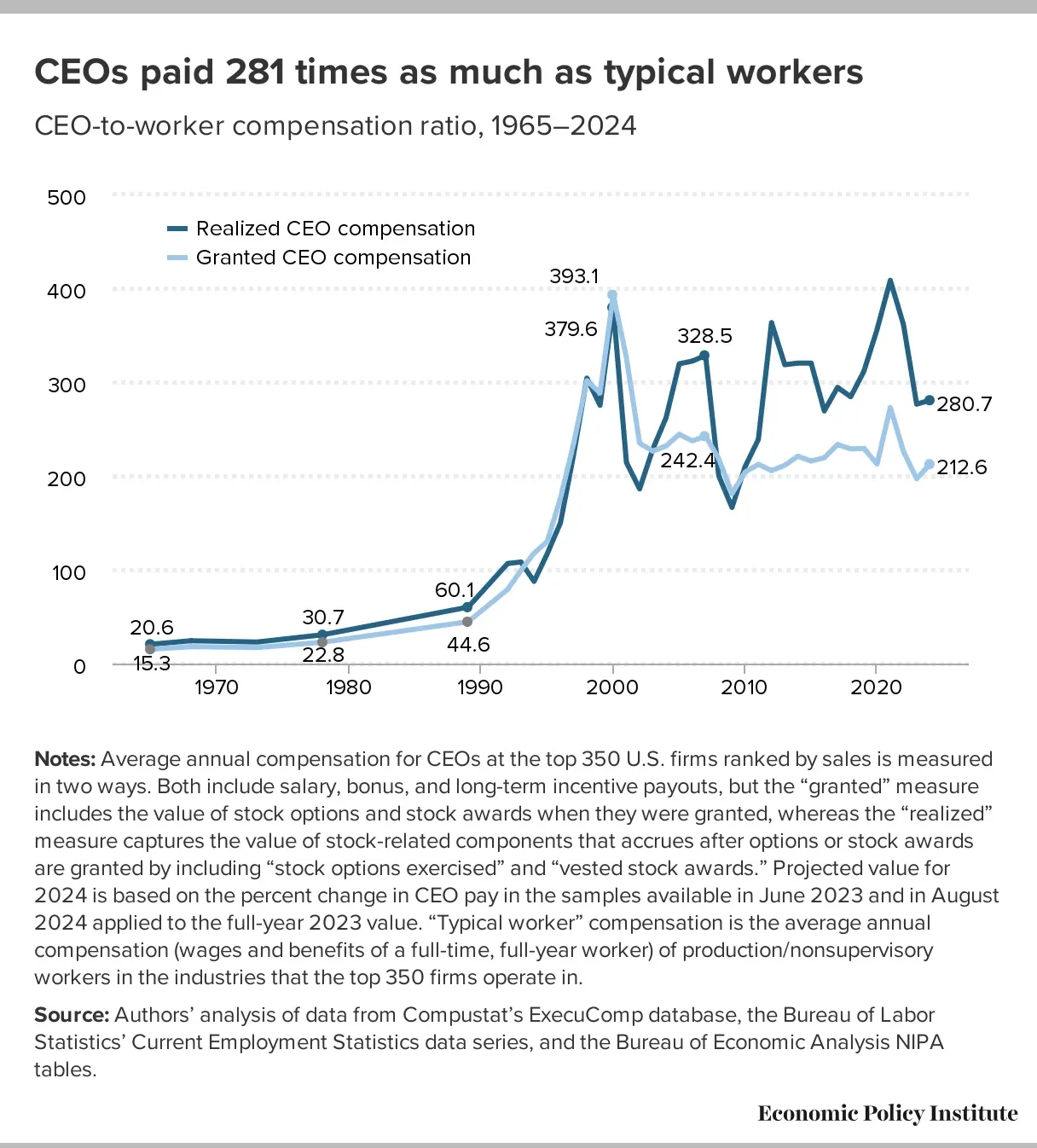
Multiple Energy Central respondents dug into this trend:
“The differential between CEOs and line workers who actually keep the lights on is way too large.”
“I think the CEO salaries and benefits should be indexed to the median salary of the people in their corporations.”
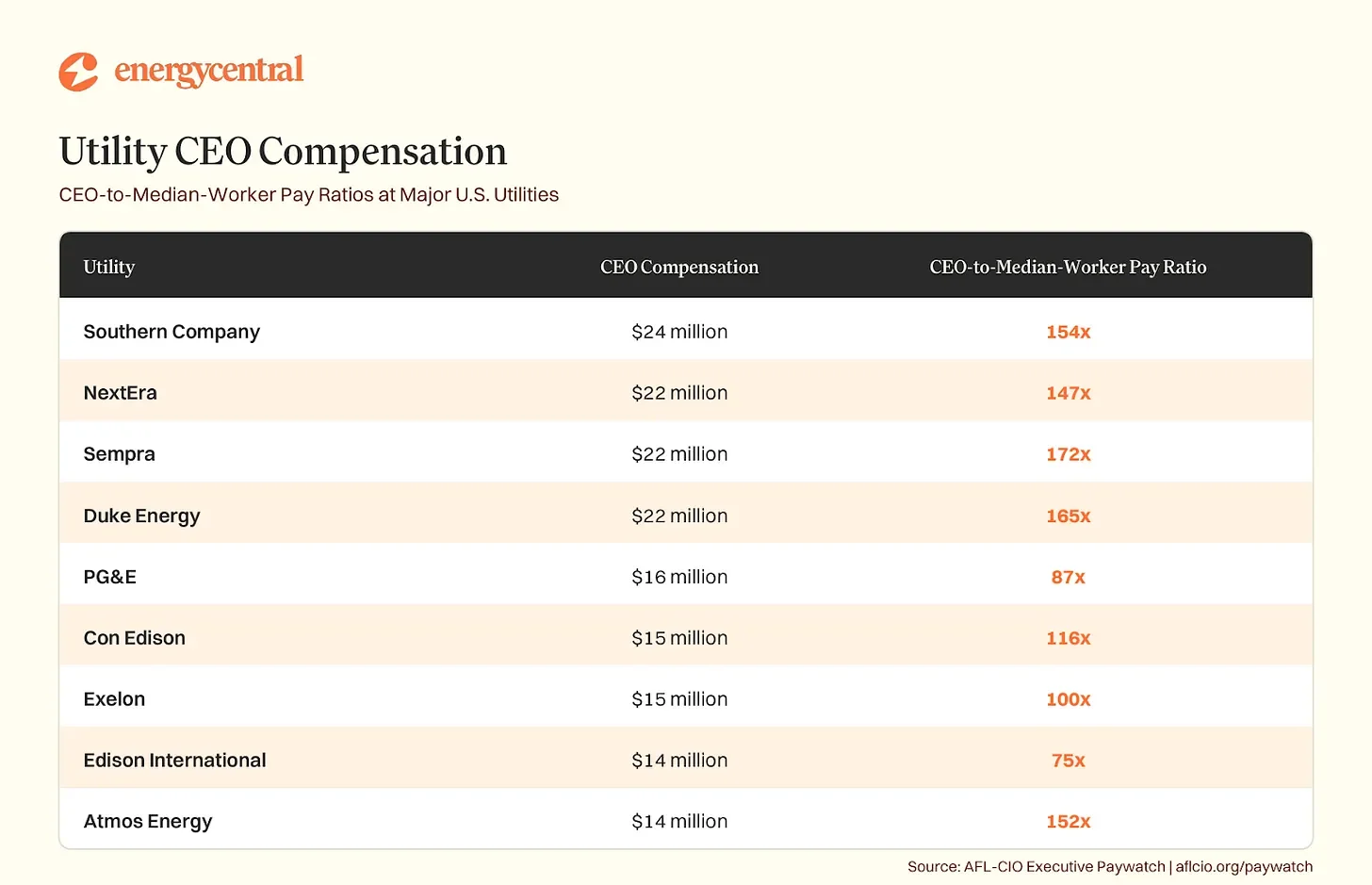
So, how do the highest-paid utility CEOs from the Energy and Policy study stack up against the 2024 CEO-to-median-worker ratio for more than 2,000 companies?
Among the 64 utilities included in the above database, the ratios range from 9x (RGC Resources) to 172x (Sempra), with a median of 75x.