
Energy Isn’t Red vs. Blue. So Why Do We Keep Pretending It Is?
ecently, power industry decision-making has gotten pulled into the ever-growing vortex of politicization. But in an increasingly divided country, it’s not exactly surprising.
Renewables vs. fossil fuels. An energy transition vs. American Energy Dominance. Beautiful Clean Coal vs. Climate Emergency.
This trend of everything being labeled as red vs. blue is, simply put, exhausting.
When everything gets pulled into a partisan lens, debates get painted with overly broad (arguably lazy) strokes.
Sure, politics in energy is nothing new—just look at the yo-yoing history of solar panels on the White House roof. But recently we’re seeing energy policy debates sink further into the low-hanging fruit of identity politics.
As a counterpoint, I thought it’d be helpful to identify some notable examples where the cold, hard data of energy can dispel red vs. blue state assumptions, encouraging us all to think more deeply than the partisanship of it all:
Myth #1: RED STATES steer away from renewables
If renewables are the domain of people who back a Green New Deal, then surely red state grids ignore renewables.
Renewable penetration, though, doesn’t abide by partisan-colored glasses. Looking at the 2025 power generation data, red states1 are among the national leaders:
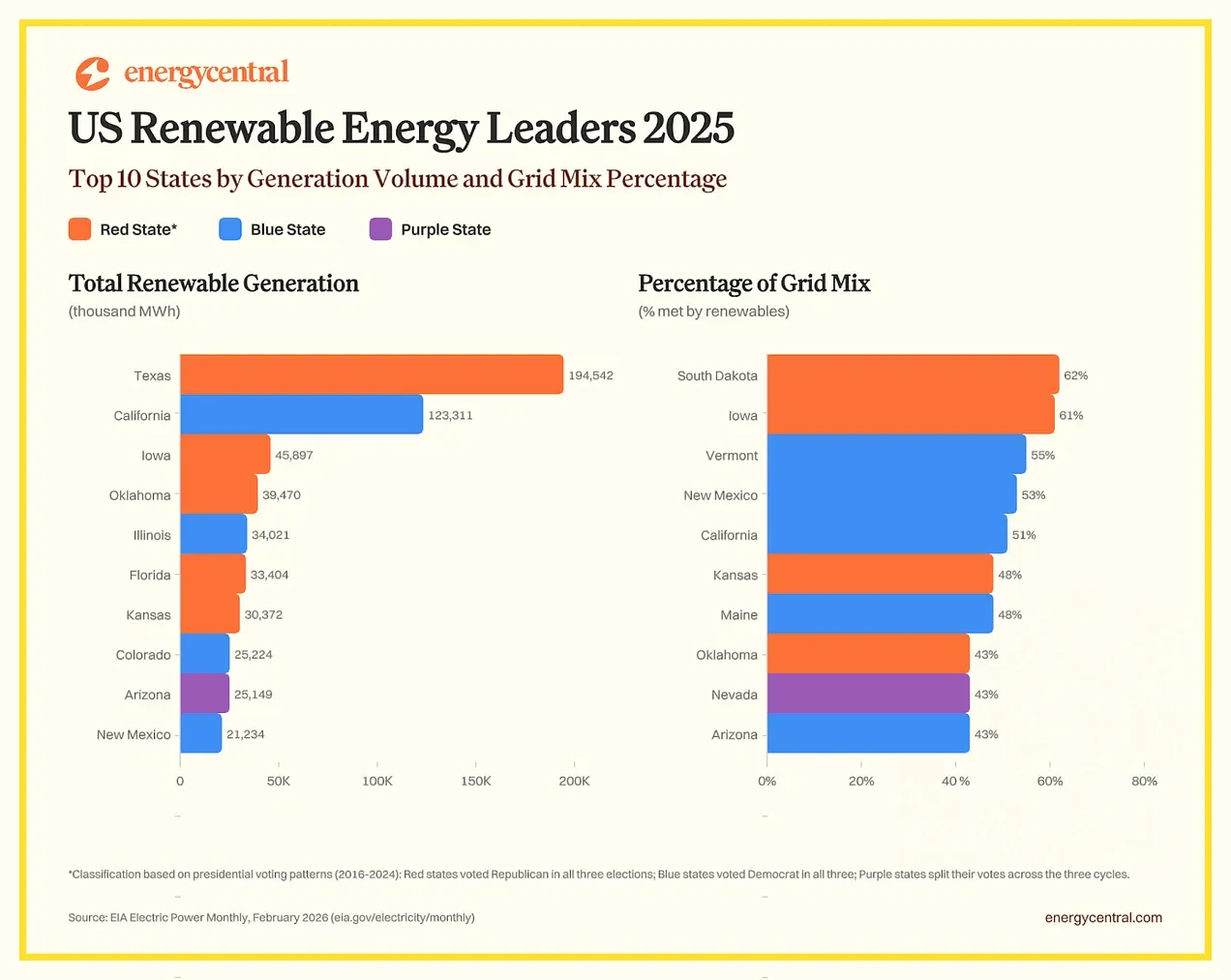
Renewables in these states can thank abundant wind resources in Middle America and the Sunshine State’s namesake solar power, as well as some pro-renewable policies like the Kansas Renewable Energy Standard and Competitive Renewable Energy Zones in Texas.
Myth #2: Coal continues to have a presence because of strong RED STATE support.
Coal is a political lightning rod: We often think Democrats are more likely to support closing these carbon-emitting plants, and Republicans will support existing coal plants in the name of reliability renewables can’t deliver.
Does the data support that distinction?
Looking at coal plants closed since 2023, 60% of shuttered coal capacity came from red states: