How badly our energy forecasts have messed up—and why we should still care
There’s a chapter in Neil deGrasse Tyson’s Starry Messenger about how humans love predicting the future but are spectacularly bad at doing so. The 20th century was full of arrogant, futuristic declarations that turned out to be—politely put—optimistic. It wasn’t uncommon to be both loud and wrong, as it turns out.
So what can we, as an industry predicated on thoughtful future-casting, do to avoid that same fate? When the IEA, the EIA, or any of the rest of the alphabet soup publish a model, you’ll hear kneejerk reactions. Stakeholders on every side rush to use numbers to justify their story, whether that’s that wind will save us, nuclear is the only sensible route, fossil fuels are forever, etc. Do we want to be loud and wrong again?
I sure don’t. So I was inspired to look backward. What did voices of the past confidently predict about energy, and what actually happened? I dug into the history books and walked away with some clear patterns and practical takeaways. Here’s what I learned, starting with the boldest predictions. ➡️
1) “All petroleum will be exhausted by 1939.” (1909 USGS warning)
A dramatic 1909 press account of USGS predictions dug up by Paleofuture warned of petroleum exhaustion by the 1930s.
Reality: Oil scarcity predictions have repeatedly been pushed out as new fields emerge, recovery techniques improve, and technologies evolve. Rather than running out, markets and technology delivered more accessible oil for many decades with reserves continually growing.
2) Methane from algae will replace gas by 2020. (1974)
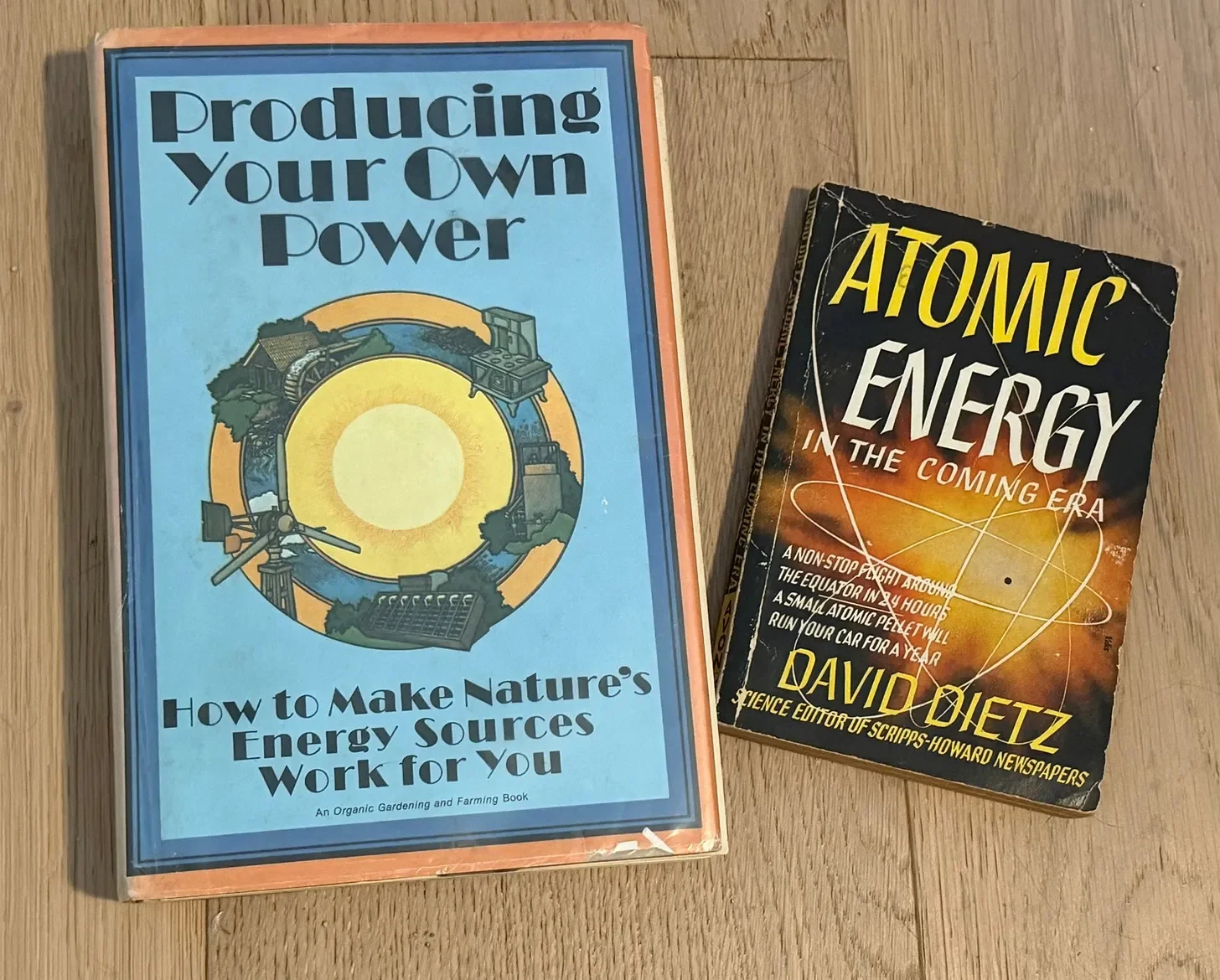
I have a couple decades-old books in my personal library from used book stores—they feel like windows into the past. For example, Producing Your Own Power (1974) projected that algae-fed digesters could “produce as much as 100 percent of our gas needs by the year 2020.”
Reality: Not even close. Biogas and biomethane have grown, but they amounted to a tiny sliver of global gas supply in 2020. IEA scenarios show biogases rising from ~1% today toward a few percent by mid-century.