
Our Blog
Chester Energy and Policy started in 2017 as a blog before blossoming into a full consulting business. The goal of the blog originally was simple: answer interesting questions in the world of energy & sustainability that weren’t being answered elsewhere, tapping into energy data sets, expert interviews, and a unique lens.
Today, the blog section of Chester Energy and Policy seeks to continue that mission: answering interesting questions. If you have a question that you think is worth diving into for a blog post, reach out and let us know! .
Read Most Recent Blog Posts

Technological Beyond the Sun : How Analytics is Revolutionizing Solar Operations?
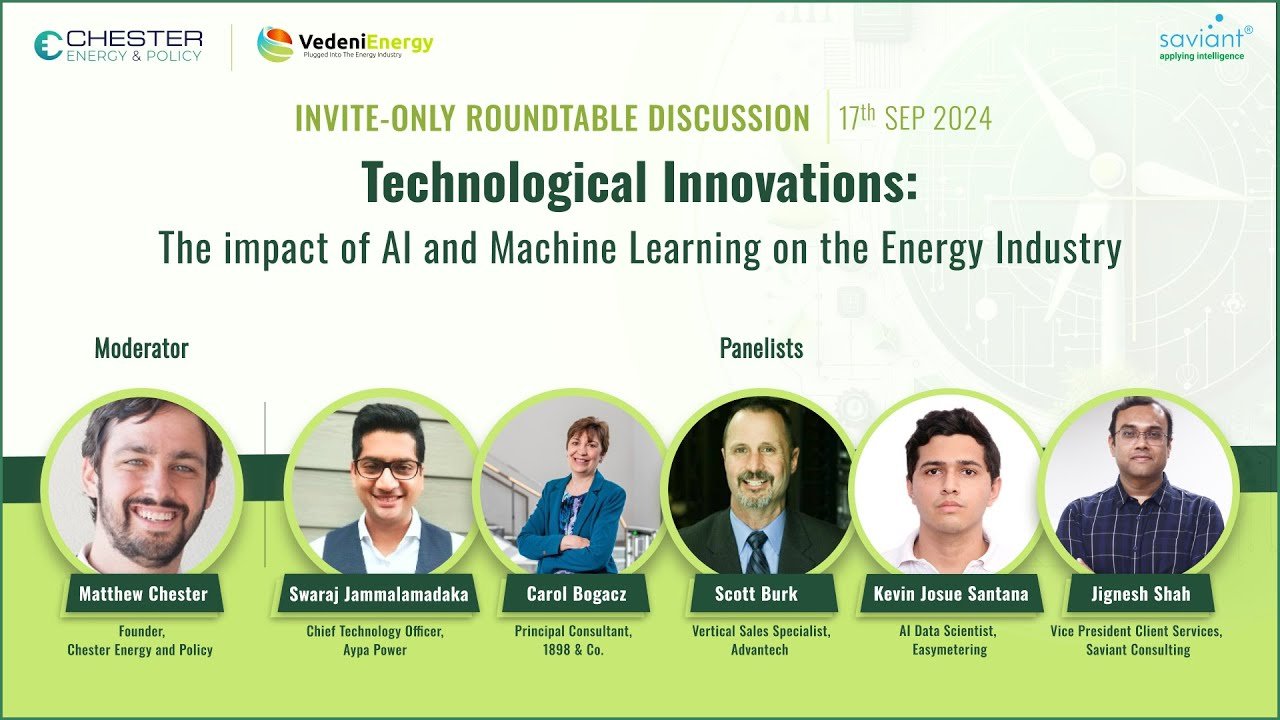
Our recent roundtable discussion, '𝐓𝐞𝐜𝐡𝐧𝐨𝐥𝐨𝐠𝐢𝐜𝐚𝐥 𝐈𝐧𝐧𝐨𝐯𝐚𝐭𝐢𝐨𝐧𝐬 - 𝐁𝐞𝐲𝐨𝐧𝐝 𝐭𝐡𝐞 𝐒𝐮𝐧: 𝐇𝐨𝐰 𝐀𝐧𝐚𝐥𝐲𝐭𝐢𝐜𝐬 𝐢𝐬 𝐑𝐞𝐯𝐨𝐥𝐮𝐭𝐢𝐨𝐧𝐢𝐳𝐢𝐧𝐠 𝐒𝐨𝐥𝐚𝐫 𝐎𝐩𝐞𝐫𝐚𝐭𝐢𝐨𝐧𝐬,' explored these pressing challenges and the role of advanced analytics, AI , and integrated communication platforms in achieving a balanced production-consumption system.

USEA Virtual Press Briefing: DER and Virtual Power Plants: The Easiest Supply Boost
“All of a sudden, distributed energy resources and virtual power plants have come of age, after being a pipe dream of environmentalists,” says journalist Llewellyn King, who has organized and will moderate the briefing.

AI, Automation, and Shaping Tomorrow’s Grid: Lessons from Todd Inlander of SCE at Itron Inspire [an Energy Central Power Perspectives™ Interview]
At the recent Itron Inspire event, industry leaders gathered to explore the latest advancements in technology, energy, and water management. One of the standout moments was the keynote delivered by Todd Inlander, Senior Vice President and Chief Information Officer at Southern California Edison. His presentation focused on how technology, particularly AI and digital tools, are reshaping the future of utilities and helping SCE tackle some of the industry's most pressing challenges, from grid reliability to the growing need for electrification.
USEA Virtual Press Briefing: After the Disasters: Making the Supply Chain More Resilient
There was a time, not so long ago, when businesses followed the just-in-time (JIT) management philosophy and inventory strategy that aims to reduce waste and increase efficiency by receiving inventory only when it is needed.

Showcasing Innovation: GSA’s Green Proving Ground Program Paves the way for Building Energy Efficiency and Operations Technology
The adoption of new technology in federal building retrofits is stunted by the fear that the technology is not proven—the risk of failure or underperformance is too high. Yet, at a time when the demand for advanced building technologies has never been greater, this caution could be counterproductive. To achieve ambitious carbon reduction targets, buildings must not only adopt but excel in energy efficiency. Recognizing this, the federal government has found it necessary to step up as a leader in fostering and promoting innovative American-made technology. Specifically, the Green Proving Ground (GPG) Program from the U.S. General Services Administration (GSA) has served as a shining example of how public sector initiatives can successfully drive advancements to the next generation of building performance.

Sealing the I&I Threat: How the City of Springtown Avoided Prematurely Paying Millions for Wastewater Treatment Expansion
nflow and Infiltration (I&I) from leaking manholes is a serious and costly problem for wastewater treatment plants. Manholes can develop cracks or gaps over time, allowing rainwater and groundwater to seep into the sewer system. This infiltration dramatically increases during storms, overwhelming the wastewater infrastructure with large volumes of excess water that should not be treated. As a result, the plant’s capacity is strained, leading to higher treatment costs, potential overflows, and increased wear on equipment. In severe cases, the plant may reach regulatory capacity limits, forcing municipalities to prematurely invest in costly expansions.

Search Blog Posts by Category





















Search Blog Archive
- Blockchain/Crypto 4
- BrokerX 39
- Buildings Sector 11
- Clean/Renewable Energy 47
- Climate Change 41
- Coal 10
- Convergent Energy and Power 8
- Crowdfunding 7
- Crunching the Numbers 45
- Data/Digital 36
- Doxim/Striata 19
- Electric Vehicles 9
- Energy Central 141
- Energy Choice Coalition 8
- Energy Efficiency 31
- Energy Markets 10
- Energy Policy 67
- Energy Storage 20
- Fantasy Energy League 4
- Food and Beverage 5
- Government Energy Organizations 19
- Green Technology 9
- Greenhouse Gas Emissions 22
- Greenwashing / Social Issues 4
- History 13
- Holidays 10
- Innovation 6
- Insights and Advice 9
- Interview 115
- Joule Case 8
- Measures of Energy/Power 10
- Nuclear Power 11
- Oil & Gas Industry 24
- Podcast 22
- Politicians and Energy 9
- Pop Culture 11
- Power Grid 43
- Profile of People+Organizations in Energy 5
- Quoted: Chester Energy and Policy 5
- Review of Books+Products+Services 10
- Saviant 6
- Solar Power 32
- Sports 19
- Sustainability 42
- Technology 26
- The Lighter Side 7
- Transportation 11
- USEA 24
- Utility Sector 106
- Wind Power 8
I’ve already outlined what DTECH means to the utility landscape, but as you can imagine, takeaways from the leading transmission and distribution event in the United States are as varied as they are deep. When you’re talking about a program that featured over 800 speakers and covered everything from grid network model management to the challenges keeping utility execs awake at night, the feedback is going to be as diverse as the tech itself. Having to also navigate a tradeshow floor with nearly 700 companies means you’re never going to be able to see it all, which makes it all the more important to get a sense of what caught other people’s attention.